


THOUGHT ESSAYS are your weekly dose of open-ended, playfully subversive explorations that invite you to think differently about the everyday and the systemic alike.
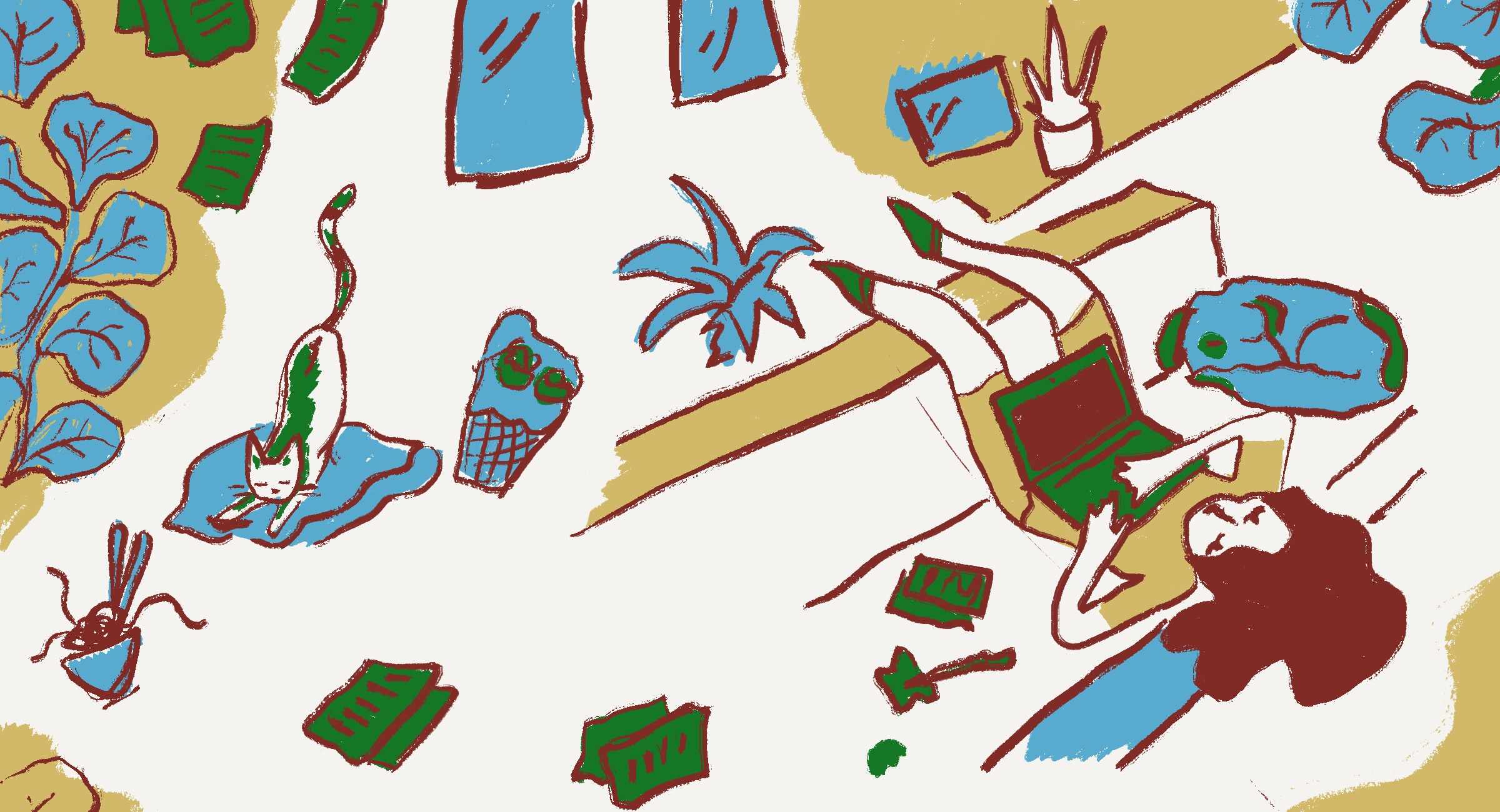
Despite being nearly six years past the global pandemic, the debate on work-from-home productivity refuses to settle. Some argue for the moral and cultural necessity of human connection in offices. Others more desperately bid for a return to pre-pandemic norms (”it’s good to spend some time in the office”). Meanwhile, WFH has quietly embedded itself as a new baseline, boosting autonomy, strengthening the employee value proposition, and reshaping how talent evaluates employers.
Out in the wild, this tension plays out far from think-pieces. One executive described to me their latest HR dilemma involving an employee who claimed a WFH day while getting tattooed a full arm sleeve — arguing that being responsive to email from their phone constituted a day’s work.
Depending on your perspective, this is either the logical edge of flexible work, or the fairly rude breach of an unspoken social contract.
Watching organisations navigate WFH, one might be forgiven for thinking it’s just a typo away from another three-letter acronym. One letter separates flexible work from organisational chaos.
All this wrangle, not enough consolidation, and yet we still seem to tiptoe around the crux of it:
Is our problem really that we are navigating the growing pains of work-from-home culture? Or is it that the autonomy propagated by WFH exposes the creative bankruptcy of systems built for compliance?
Enter creativity.
Many corporate workplaces already struggle to integrate creativity into their core operations — particularly those reliant on rigid hierarchies, risk aversion, and highly specialised roles. (This necessarily exists across legal, medical, and some engineering domains.) These systems are usually optimised for efficiency, conformity, and immediate output, which are perfectly reasonable priorities. Some level of conformity breeds organisational harmony. Cost efficiencies are favourable to the bottom line. The tension emerges when those organisations structurally built for compliance also expect sustained innovation.
Creativity requires certain conditions to thrive. If those conditions are systematically constrained, innovative output won’t change, regardless of the calibre of talent involved. At the centre of these optimal conditions sits autonomy.
For creativity to propagate sustainably, the required environment is specific:
Intrinsic motivation must be prioritised. External rewards (pay, titles, job security) matter, but they are hygiene factors. As the need for creativity increases, meaning, cultural coherence, and narrative clarity become decisive. People don’t innovate because they are told to. They do so when the work feels internally consequential.
Enough workflow constraints for structure, but no more. Your WFH parameters might require availability during agreed common times or in person at key moments, but do not let this slip into rigidity for the sake of optics.
Make it easy to adopt an identity as an idea generator. Employees must first give themselves the internal permission to view themselves as creators, not just executors.
In the realms of creativity and innovation, autonomy is not just an intangible preference for companies to reach. It is actually a fundamental prerequisite for producing original, high-level strategy.
Autonomy, by its nature, demands trust, which is what really makes people nervous about establishing WFH norms. It means building enough faith in teams that physical absence from the office won’t reduce them to meandering loiterers on paid time.
It’s not that organisations don’t want creativity. They want risk-free creativity. But creativity without risk is simply optimisation. Useful, but not capable of producing originality needed for lasting innovations.
The answer is certainly not to remove rigid structures, but to design them differently: strong enough to sustain order, yet fluid enough to dance with the creative process.
Strong like a tsunami. Adaptive like a river. Both are water.
Allow the autonomy WFH brings to reveal what your current systems are actually built to do.