


THOUGHT ESSAYS are your weekly dose of open-ended, playfully subversive explorations that invite you to think differently about the everyday and the systemic alike.
Co-authored by strategy consultants, Des Kennedy (Applied Creativity) and Rachel O’Brien (Ideas Economy), connecting insights across the UK and Australia on business and creativity.

While many leaders rightly discuss the importance of ‘maximising shareholder returns’ to their staff, effective leaders are able to communicate exactly why their work matters. The pressure is real, but what truly motivates your people to deliver each day is not the bottom line.
As perhaps a surprise to nobody, 66% of the global workforce is currently disengaged, representing an untapped $9.6 trillion in economic value. If captured, it would translate to a 9% increase in global GDP.1
Good storytelling acts as the bridge between intention, activity, and value. If you, as a leader, can articulate your company’s intent clearly, this reflects in engagement and ultimately, in shareholder value. If you can’t, your organisation risks discord, your people tuning out, and both productivity and potential returns diminishing.
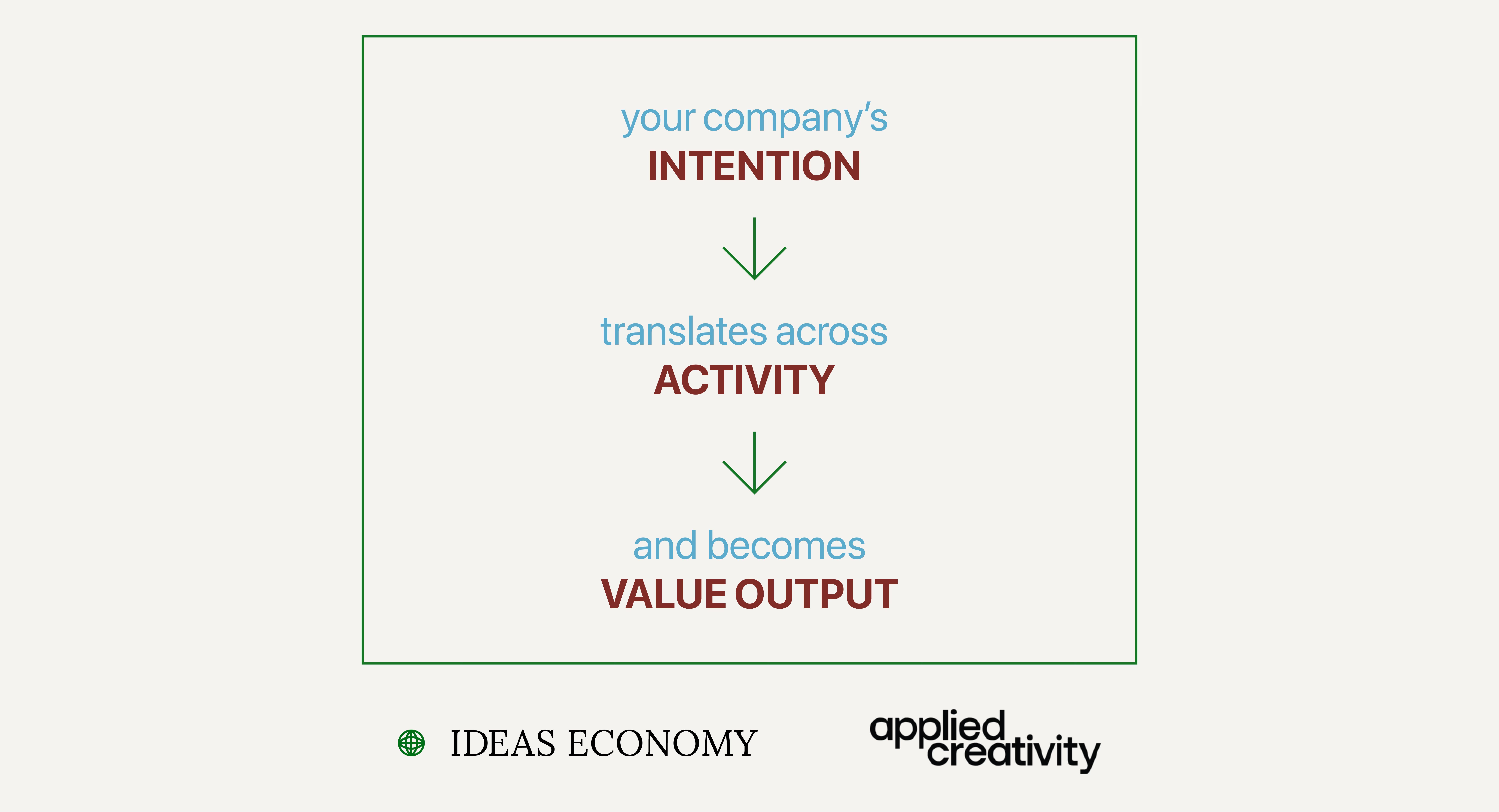
For a story to be strategically effective, it must clarify three things:
Why we exist.
Key drivers for value.
How everyday activity contributes.
The ‘why’ is your company’s purpose. Rather than reciting a bland statement, leadership must bring it to life so your people can see themselves in it.
That ‘why’ guides your ‘key drivers’. Every business has specific activities that really move the needle, as well as a lot that don’t. People focus on what they believe matters most. What is said, modelled, and rewarded.
For some, value is built through close client relationships; for others, relentless innovation. What truly matters for your business must be articulated clearly, so employees can focus on where they know the value lies.
Once the ‘why’ and ‘key drivers’ are clear, the ‘how’ follows naturally. Decision-making becomes simpler and alignment sharper.
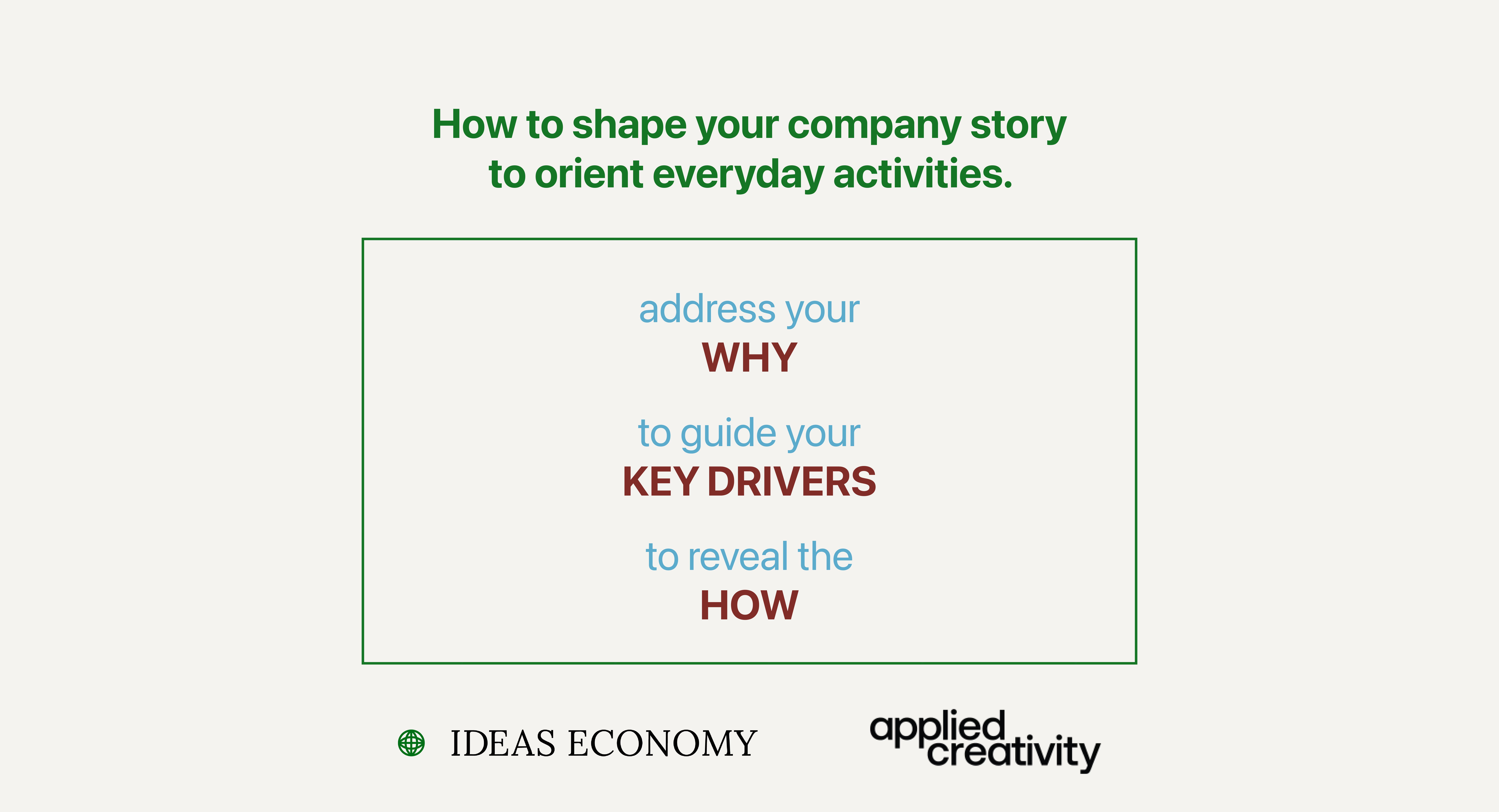
Compelling storytelling serves as your proxy for clarity, acting as the communication pathway that ultimately drives shareholder value.
Metrics alone can’t do that.
A dashboard can report activity and progress, but it can’t solely reinforce direction. Frameworks like Objectives and Key Results (OKRs) help, but they must be communicated with context; otherwise, they risk becoming noise. This leads to misunderstandings, causing innovation to stall and effort to drift.
Consider your company’s story as a flowing river that forks into many directions. You, as the leader, decide where the strongest current flows. The story you tell determines where the energy goes and how much shareholder value it creates.
Numbers measure and stories mobilise. But when numbers live inside a coherent story, value endures.
Gallup, Inc. (2025). State of the Global Workplace: 2025 Report. https://www.gallup.com/workplace/349484/state-of-the-global-workplace.aspx