


THOUGHT ESSAYS are your weekly dose of open-ended, playfully subversive explorations that invite you to think differently about the everyday and the systemic alike.
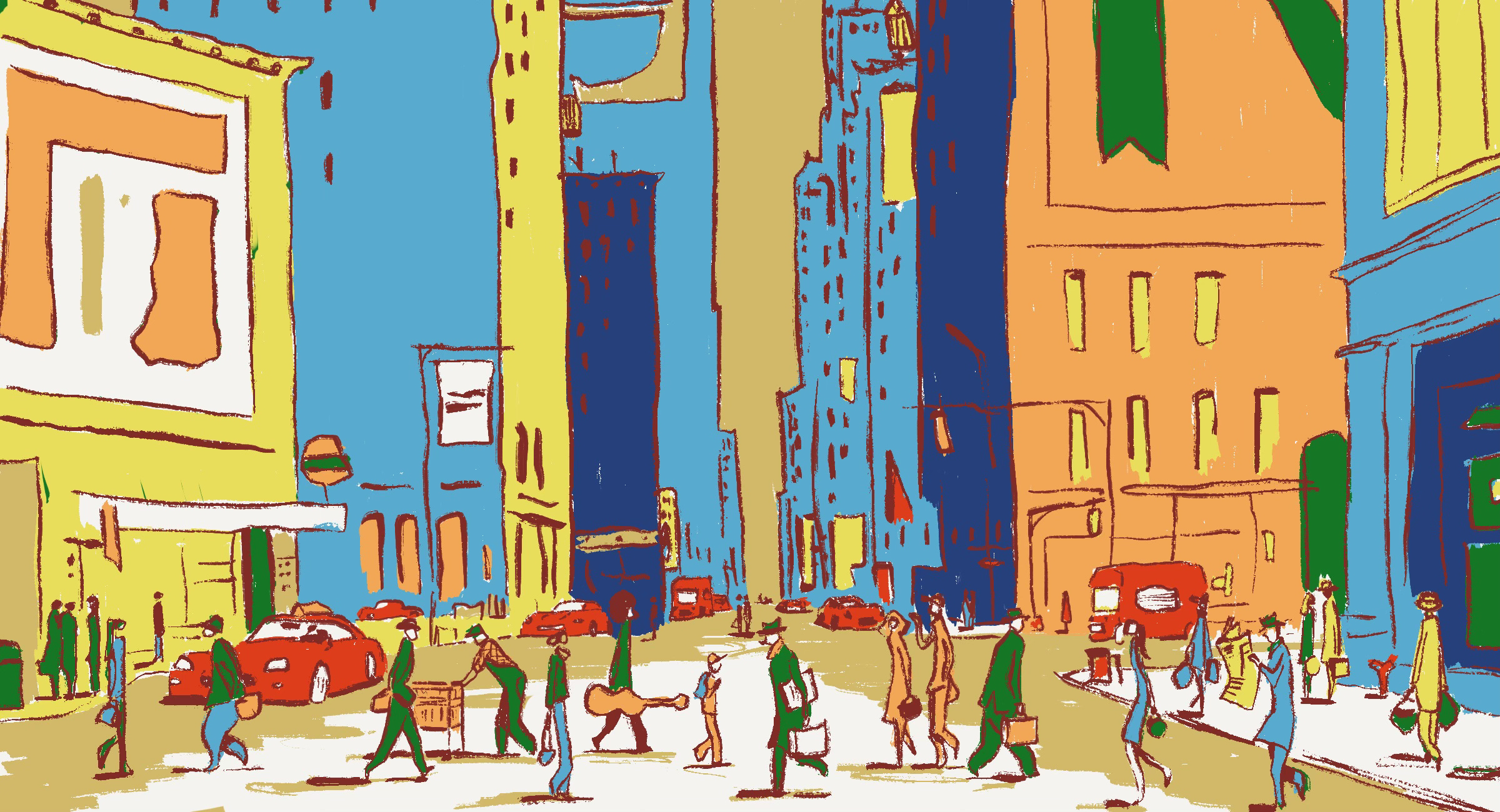
Cities evolve faster than their stories. We see that looking at the world city network, as defined by The World According to GaWC.1 The British think tank’s hierarchy measures how well each global city connects to the wider constellation of urban nodes, from the deeply integrated Alpha cities to the regionally oriented Gammas. London and New York City, for example, sit atop the ranks as Alpha++ cities, as leading hubs of commerce, talent, and culture. But it’s the Betas that reveal a more interesting story. Big enough to matter, small enough to be just a little insecure.
Beta cities are the crucial connectors of a region — plugging their state or territory into the global flow of commerce. They include Rome, Dallas, Ho Chi Minh City, Perth, Cairo, Manchester, Copenhagen, among others. What you might call the middle children of global urbanism. And like middle children, they’re often caught between who they once were who they’re already becoming. Their self-narratives lag behind their realities. In post-monoculture cities, especially, identity lingers in yesterday’s industry long after the ecosystem has diversified. Case in point: what is Austin after its post-tech high? Manchester beyond its longstanding manufacturing centre? It’s what you might call an awkward adolescence. No longer the global-city babies, not yet fully-fledged hubs. Naturally, growing pains ensue.
Beta cities tend to follow an unusually curious growth curve.
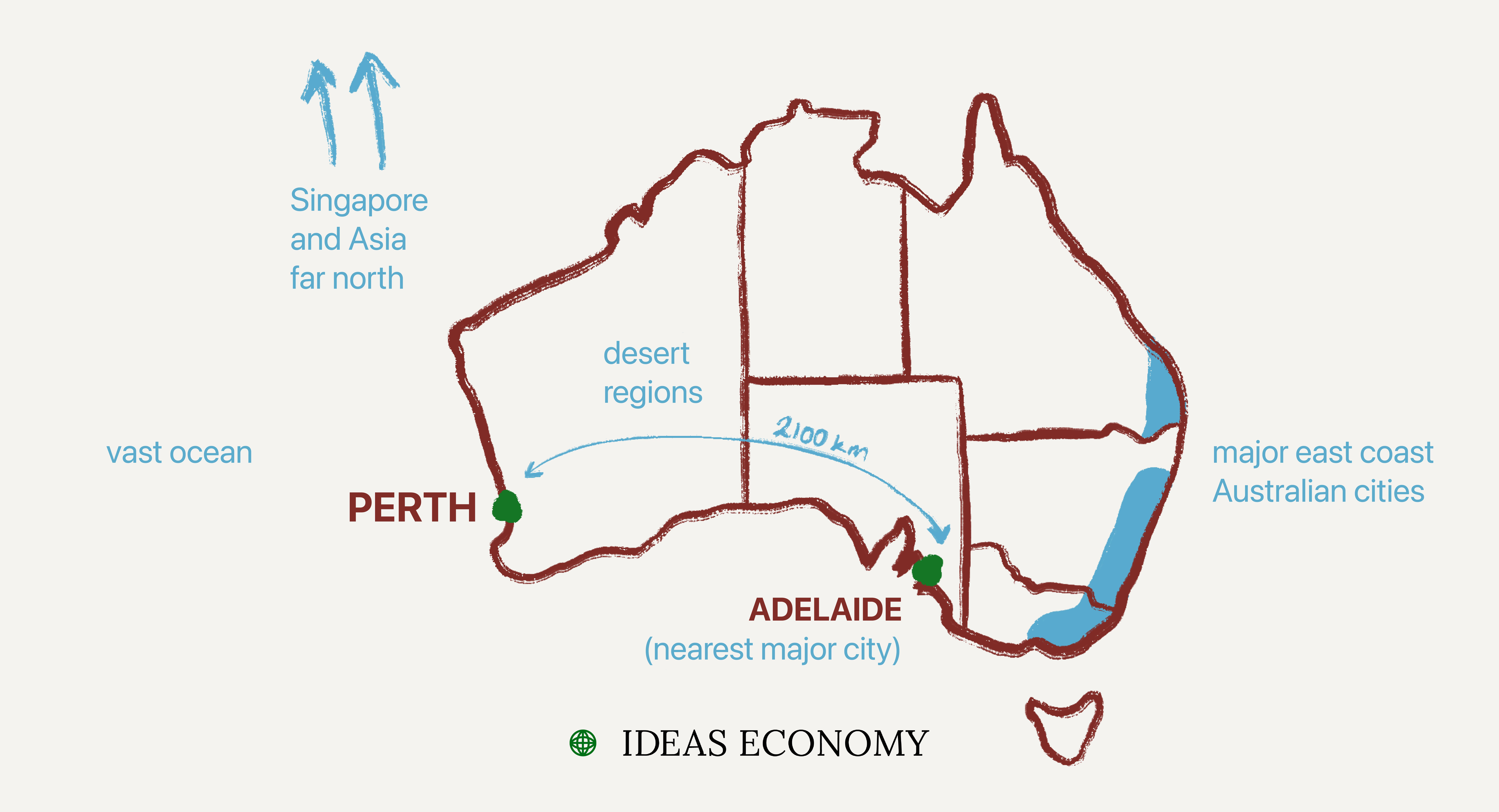
Perhaps the best exemplar of this is Australia’s own sunny Perth. Once a sleepy mining and resources town, Perth is evolving faster than its collective identity can process. Out of all global Beta cities, it is the most geographically isolated. It is surrounded by ocean to its west, desert to its east, and its nearest major city, Adelaide, is about 2,100km away (approx. 1,300 miles). Perth is the world’s largest globally-connected city that is also absurdly far from almost anything else. And it is here that we see our common Beta-city dynamics most exaggerated.
Perth, purveyor of the flagship Beta-city hang-up.
Economically, mining still dominates, alongside healthcare, construction, and education. The city has benefited from sustained infrastructure investment, resulting in well-planned precincts, new public amenities, and a rising urban polish. Salaries are high — especially across legacy industries — yet the city remains comparatively affordable. Vibrant festivals, including Fringe World and Perth Festival, have only become signature features in the last 15 years. Major precincts — including Elizabeth Quay, the Perth Cultural Centre, the State Buildings, and WAAPA at ECU City — have only taken shape in the last decade, with several yet to fully open through 2026 and beyond.
Yet, time and time again, locals still reference it as a ‘big, sleepy mining town’, make a comment or two about its ‘nice beaches’, and affirm that it’s culturally a little ‘dull’.
A classic dissonance between a region’s current and future orientation, held down by its lingering cultural narrative.
The bottlenecks of a cultural insecurity.
Like many Betas, and true to its teenaged form, Perth is also a bit too preoccupied with external validation. Once again accentuated by its distance, the city is constantly looking to the other world cities for trends, benchmarks, and standards. Always seeking outward, rarely inward. For a city that built much of its wealth from mining, culture develops reactively, with global influences ferried in from New York, London, and Europe held as the gold standard. It’s a persistent bent toward an import-first mentality for creativity, innovation, and cross-disciplinary ideas. To exacerbate this narrative, high wages and relaxed coastal living pave the way for lower risk appetites, a slight aversion to ambition (”tall poppies”), and a subsequent reduction of entrepreneurial pressure. Comfort over integration.
When everything begins with an external reference point, local creativity defaults to remixing and mimicry over originality.
