

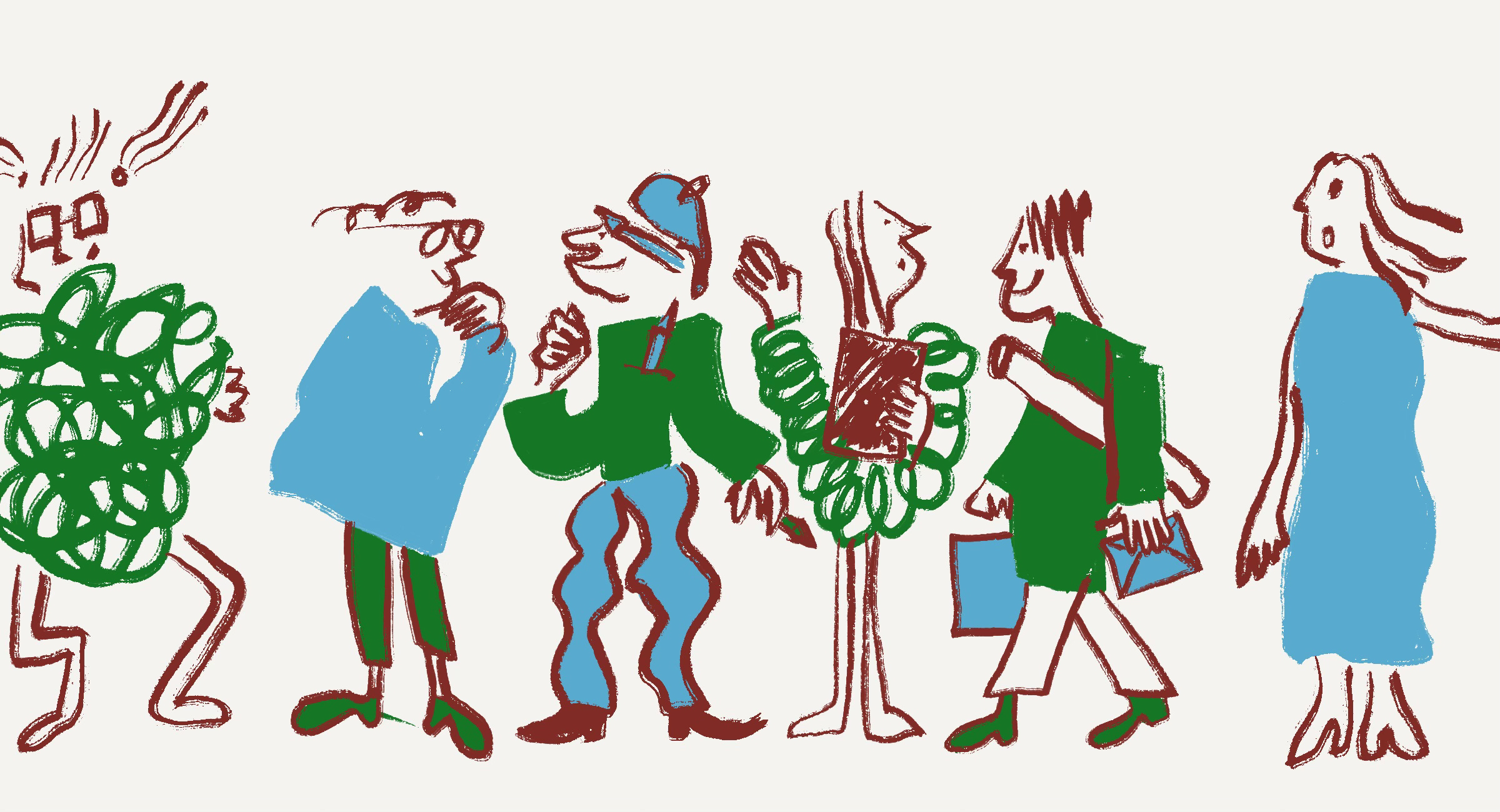
How do you apply creativity to your work?
It goes far beyond aesthetics or artistic expression. Creativity is the prerequisite to innovate. Today, as AI accelerates, execution and optimisation is cheap. Those in the workforce already feel the sweat as our economies adapt to exponential access to knowledge. With that, more people are deferring their critical sense-making to the outside world. To put another way, people are becoming less equipped to think.
Creativity is a skill that restores and strengthens that capacity. It sharpens your ability to discern what is valuable within a specific context — your community, organisation, your city, this moment in time. It aligns you with deeper meaning and other people. It also a difficult intelligence to cheapen.
It is no wonder then that, by 2035, creative thinking will be one of the most important skills for employment[1], and has already outranked technological literacy[2] as a future-proofing capability.
There is no career to which this does not apply. A banker can be creative. A musician can be deeply uncreative. The raw skill is evident wherever you can see, in action, the fruit of what it produces.
One unusual pattern I see, after over a decade of working across sectors, is this: some companies are very good at attracting creative people, and still fail to innovate their output. Creativity itself does not automatically translate into value. Not every environment knows how to harness creativity, even when it appears.
The least creative culture I had witnessed, for example, was in a theatre group. The performing arts industry is naturally a magnet for very artistic, expressive people. Only sometimes, this is captured at leadership and administrative levels.
When creativity flourishes, so does value creation. And if innovation is the goal, there are two dimensions to address:
Individual creativity
Systemic creativity
First, your personal well of creativity must be flowing (individual creativity). Next — particularly if you lead teams, organisations, or communities — the environment in which you are in must be capable of harnessing what emerges (systemic creativity).
This distinction matters most when leading between traditionally ‘creative’ or ‘non-creative’ industries, which happens all the time.
