


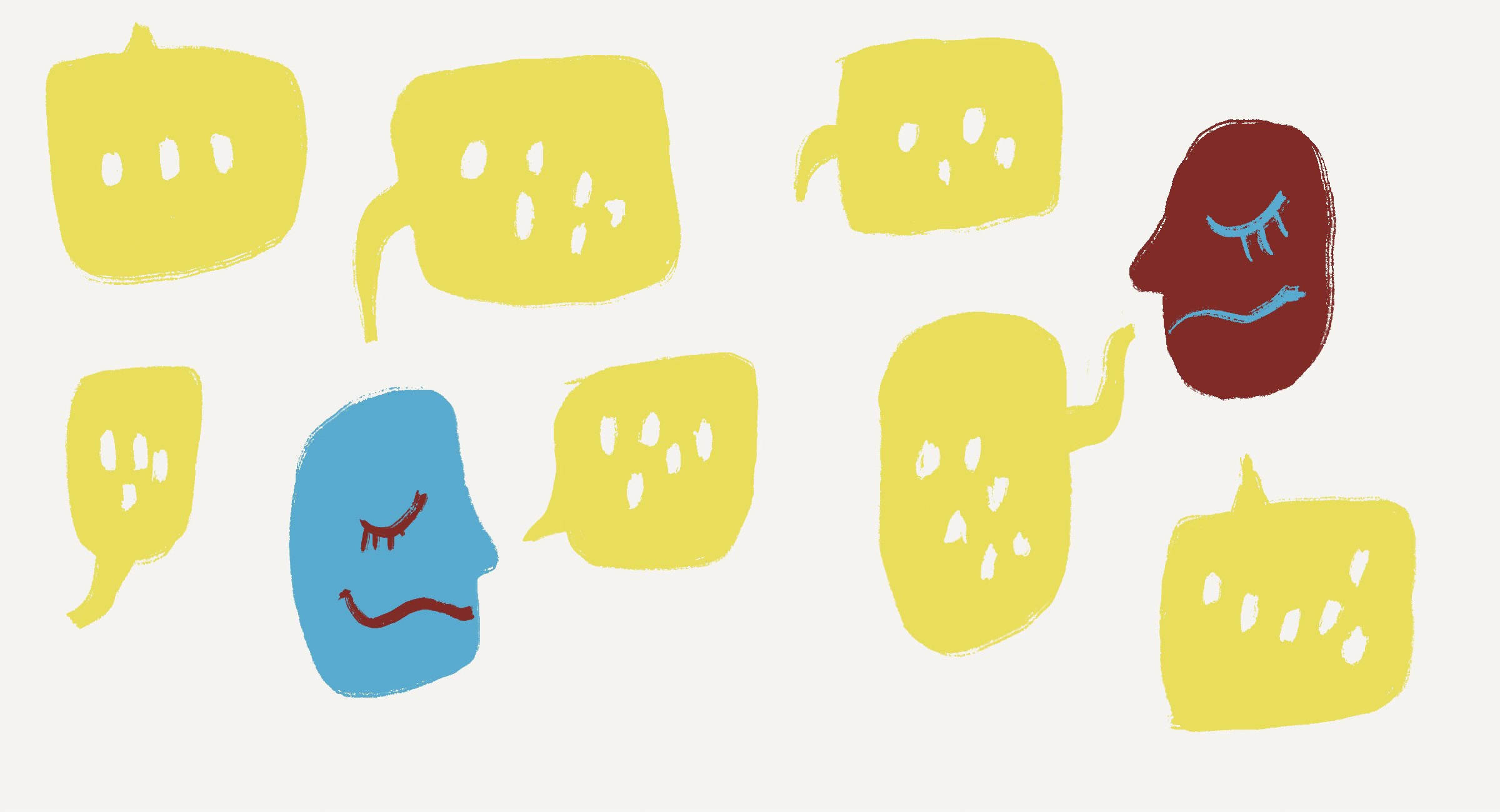
Today is R U OK? Day in Australia. From one man’s trauma evolved a national movement that has persisted for a decade and a half. Beyond the campaign’s message itself (awareness for suicide prevention), what it demonstrates is creativity in systems design. That dialogue itself can be harnessed as a tool to be deployed at scale to shape behaviour.
Meaningful culture starts with small gestures, and authentic expression is not a default (despite popular hype). People embody their authenticity only when they feel that they are safe enough, within themselves and their environment, to do so. The genius execution of R U OK? is that it prompts an invitation for authentic exchange in an easily implementable way.
I once worked with a company where the accountants and I, whom I became well acquainted with, created a ritual. Every morning we would greet each other not with a perfunctory “Good Morning How Are You” but by rating how we were feeling from 1 to 10. Simple numbers led to real transparency. “I feel like a 6,” or “I’m on 4 today”. Short exchanges as they were, they consistently opened the door to very real conversations.
Small gestures, deliberately designed, shift the texture of culture.
For organisations, this is the difference between surface-level engagement (a wellness program or one-time workshop) and structural capacity to usher change by responding to real human needs.
And yet, asking a question is only half of the equation. The other half is in being well equipped to listen and respond. Dialogue becomes a design lever: the way it’s structured determines whether it produces fleeting awareness or durable impact.
That structure can take the form of micro-frameworks: rituals, storytelling, or conversational norms — sometimes casual experiments, sometimes deliberate design.
For Australians, the R U OK? prompt matters because almost 50% believe only mental health professionals can engage with a suicidal person[1]. One small wedge — “ask someone if they’re okay” — becomes enough to open the door against isolation and, potentially, intercepts bigger problems downstream.
And so, being equipped also means considering context. Event producers know this well: when designing an event or activation, the core question is always, what do we want people to feel, and how do we want them to interact? The same principle applies to organisations, brands, family systems, cities, even nations. Culture is a set of designed interactions.
Ideas are only as powerful as the structures that give them durability. Dialogue, on its own, is ordinary communication. When deliberately designed, however, it facilitates authentic exchange, generates real value, and shapes culture at large. Small, intentional systems of dialogue can produce impact far beyond the sum of their parts.
[1] Nicholas A, Pirkis J, Rossetto A, Jorm A, Robinson J, Reavley N. Suicide Prevention Research and Campaign: Integrated findings and recommendations The University of Melbourne, 2017.