


I’ve been thinking a lot about reciprocity and gratitude, and how that affects how we perceive value.
Lately, an organisation I’ve been working with has been navigating a massive change. A good change — actually, a monumental milestone for them and the region they serve. But that still comes with the volatility of uncertainty to navigate.
Humans are not always great with change, no matter the nature of it, and I only fully appreciated this after being exposed to change leadership theory through my MBA. John Kotter detailing his “8 Steps” of change was a significant methodology which shaped my thinking on the matter, but so was examining Scott & Jaffe’s Change Curve and how informed that is by Elizabeth Kubler-Ross’ famous “Five Stages of Grief”. It suggests that even a seemingly superficial change, like reallocating a parking spot from one executive to another, can elicit a minor grieving process for the affected individual akin to the “5 Stages of Grief” Kubler-Ross model. In other words, that person likely will experience a very real mix of anger, depression, denial, bargaining, and finally acceptance (in whatever order).
It shows us that even simple experiences are, so often, not just about the thing itself. And any scale of transformation must be treated with respective sensitivity.
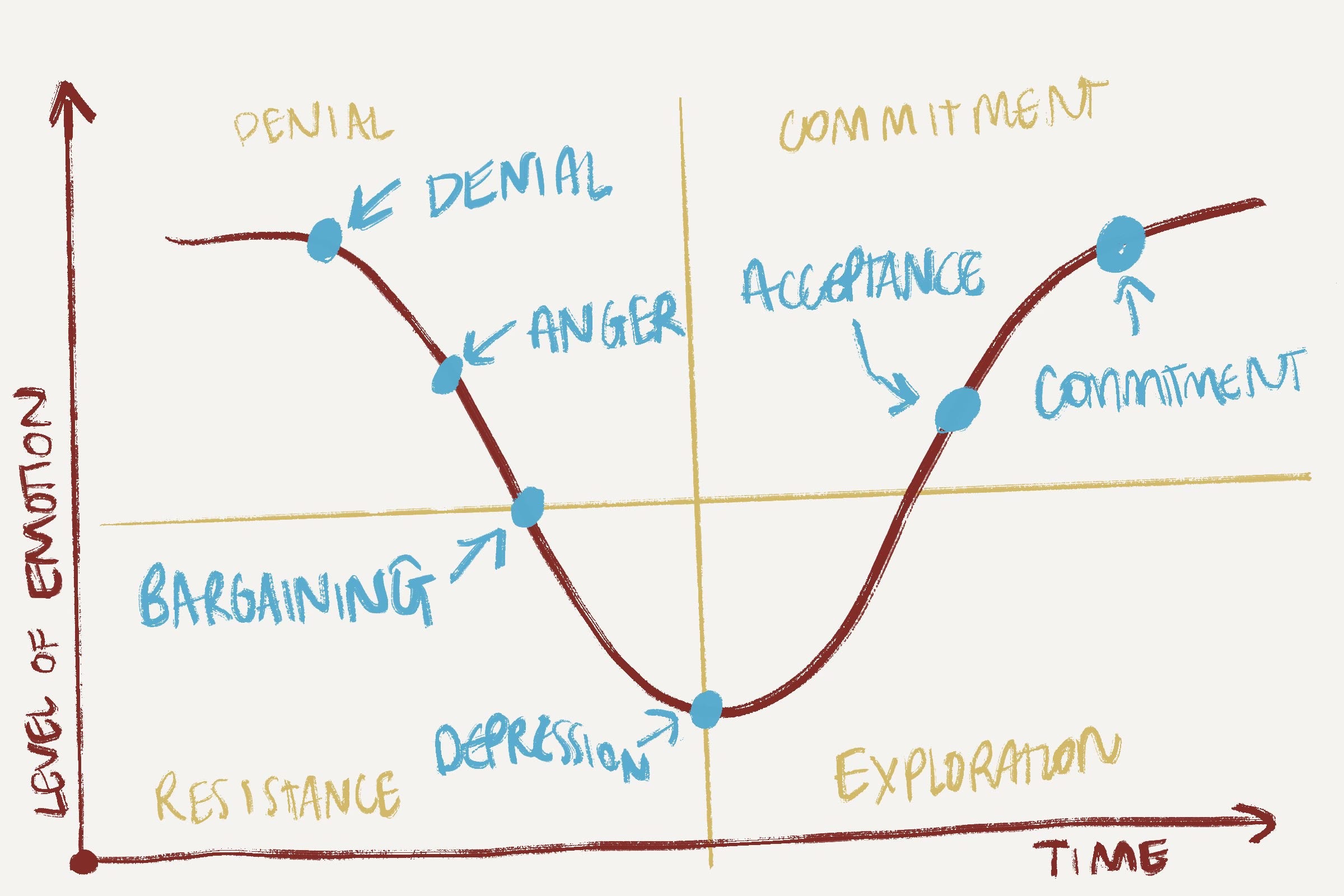
My hybrid illustration between the Scott & Jaffe “Change Curve” and the Kubler-Ross “Five Stages of Grief”. One is corporate-speak, one is therapy-speak. They map the same human experience.
Part of what I like about entering a situation as an external consultant is that I’m separated enough from the internal politicking of that company to offer a strategic perspective that might otherwise ruffle feathers, or at least be scrutinised at the mercy of such dynamics, if shared by the wrong person within that system. I don’t mean to be contrarian for the sake of it. The appeal, rather, is that I can prioritise truth and clarity in my approach, over status quo. In doing so, the slight outsider status designated to me enables my eye to more easily spot parcels of value that are hidden in plain sight.
I’m curious to how you view the outsider status, and whether you’ve felt like a bit of an outsider at any point in your life. (If you are interested, let me know if you’d like a separate piece on outsiders, as there’s much to discuss.) I am at a point now where I truly see the opportunity being in this role. For one thing, as in my consulting, being an outsider facilitates just enough distance from something to give you a unique perspective. Very important if your aim is to innovate.
This isn’t just my view, either. I’ve been reading Walter Isaacon’s biography of Leonardo Da Vinci — an excellent read if you’re interested in understanding creativity and flow state. (Isaacson, by the way, also wrote biographies on Steve Jobs, Einstein, and Benjamin Franklin.) He describes Da Vinci as somewhat of a perfect outsider. He was the illegitimate, gay, bastard child of a well-respected notary in 15th Century Renaissance Italy. Under different conditions, he could have so easily fallen into the predictable life of a notary, like that of his father, and his father, and on. Instead, by virtue of his immediate conditions, his very nature was contrarian enough to trigger a vastly alternative life path. One which subsequently forged the hyper-curious, intensely creative, and quite eccentric man that we now know as a legendary artist.
And so, with these notions on change theory, outsiders, and value creation, I find myself coming back to gratitude.
What I’ve found interesting about gratitude has been the functional role it plays when integrated as a practice. Yes, spiritually, it opens your heart. It helps you feel joy. It lightens your outlook on life, assuming you aren’t using positivity as means to emotionally bypass your discomfort. All good things if your aim is to live a happier life. How it becomes a functional advantage is so:
When you can truly allow yourself to feel the gratitude of a particular thing in your life, you are essentially training your mind to look for value. And when you can spot value — be it latent or highly tangible — you can harness it, leverage it, and benefit from it.
It seems that what gratitude gives us is not just a playful or sunny outlook on life, although yes, of course it does that. When we use it as a facilitator of reciprocity, it enables us to be better receivers. Of experience, of opportunity, of value. Why?
Because you can spot valuable things now.
And, likewise, value and opportunity can spot you back, and nest in your presence.
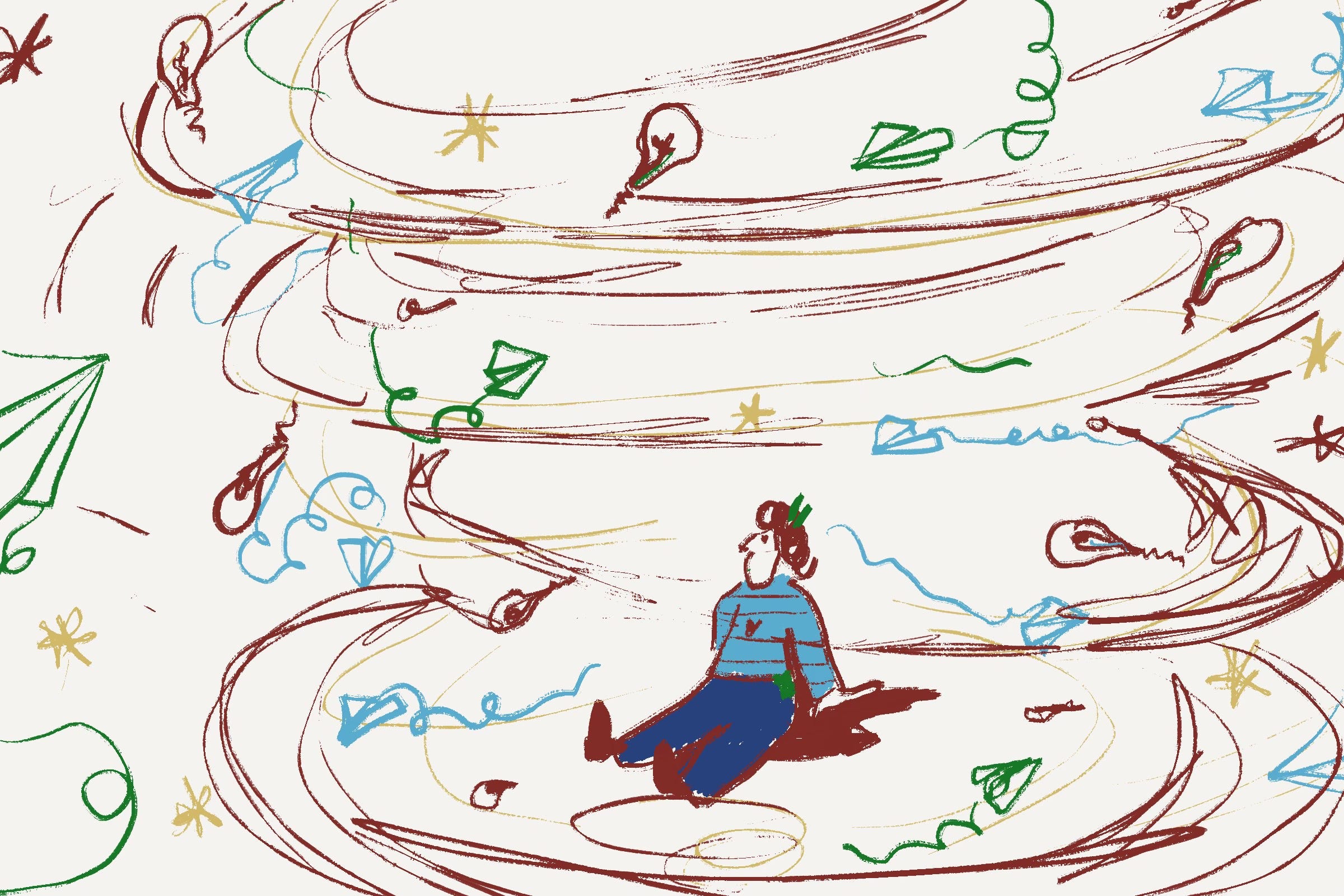
Moments of uncertainty, such as in any change period in life, tend to fragile but also opportune. It is typically not a challenge to feel ease when times are predictably smooth. Moments of change and uncertainty, however, can be scary. And, if you’ve trained your gratitude muscle with enough reps beforehand, that uncertainty might instead just be a vibrant storm within which you can sink into the eye, witness all the eccentricities blowing around you, and target your next parcel of value to create from.
Work with me on brand, partnerships & development strategy here.
Follow me on LinkedIn here.